
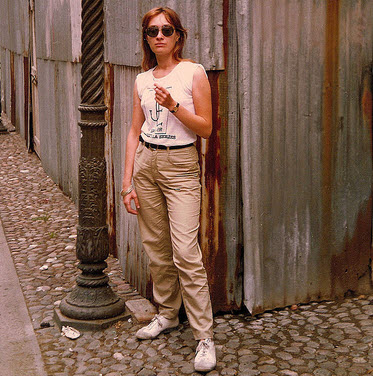
Caterina Davinio är en italiensk konstnär som ägnar sig åt poesi, digital poesi, visuell poesi, fotografi, video, med mera. Hon är bland annat känd för att ha skapat sajten Karenina.it år 1998, en av de första italienska sajterna för internetpoesi.
Caterina Davinio, som fortfarande är aktiv, har deltagit i över 300 internationella uställningar och festivaler världen över, inklusive sju stycken Biennale di Venezia i hemlandet Italien.
Bakgrund
Caterina Davinio föddes i Foggia i östra Italien den 25 november 1957, men levde från och med år 1961 i huvudstaden Rom. Hon började skriva poesi när hon var 14 år gammal.
Davinio studerade litteratur och konsthistoria på Sapienza – Università di Roma, och hade bland annat Giulio Carlo Argan som lärare. År 1981 erhöll hon sin examen (BA) i italiensk litteratur.
I Rom samlades konstnärer från många länder och Davinio kom i kontakt med personer som ägnade sig åt experimentell poesi och konst.
För Davinio präglades 1980-talet av ett turbulent leverne med drogmissbruk, något hon senare skrivit om i flera av sina böcker, inklusive Color Color (1998), poesisamlingen Serial Phenomenologies (2010) och poesisamlingen Il libro dell’oppio 1975 – 1990 (Boken om Opium 1975 – 1990) som kom ut år 2012.
1990-talet
Under det tidiga 1990-talet blev Caterina Davinio en av pionjärerna inom den italienska eletroniska poesin. Hon experimenterade med nya mediaformer, videor, digital fotografering, visuell konst, med mera, samtidigt som hon också skapade konst med hjälp av traditionella tekniker som målning och icke-digital fotografering.
År 1997 samarbetade hon med kompositören Sergio Maltagliati i netOper@, ett av de allra första italienska interaktiva konstverken för webben. Samma år ställde Davinio ut verket Terminal Videopoems, animerad digital poesi, på Biennale di Venezia.
Året därpå startade Davinio sajten Karinina.it vilket var ett av de allra första exemplen på en sajt för italiensk internetpoesi. Exempel på poeter som bidrog med material till Karenina.it är Mirella Bentivoglio, Julien Blaine, Eugenio Miccini, Clemente Padin, Philadelpho Menezes och Lamberto Pignotti. På Karenina.it samlades experimentella poeter, kritiker och konstnärer verksamma inom nya media. Den var inte bara en plats där man kunde lägga upp sina alster, utan också en plats för diskussion, analys och introspektiv. Flödet av ord och information sågs som konst i sig. År 2003 erhöll Karenina.it utmärkelsen MAD03 Award i kategorin Net-Zin.
Exempel på digital konst / videokonst som Caterina Davinio skapade under 1990-talet
- Centomilamodi di… Perdere la testa (1992)En digital animation
- Dialogie al metroquadro (1994–1995)En samling digitala animationer
- Eventi metropolitani (1995)En samling digitala animationer
- Videopoesie terminali (1996 – 1997)En serie av video- och datorpoesi
- La casa-teatro di Sade (De Sade Theatre-Home)
- Zinskij, l’ultima lettera (Zinskij, the Last Letter)
- Natura contro natura (Nature Against Nature)
- Il nemico (The Enemy)
- U.F.O.P., Unidentified Flying Poetry Objects (1999)En samling digitala animationer
- Tribute to Munch
- Tribute to Magritte
- Tribute to Julien Blaine
- Tribute to Bartolomé Ferrando
- Self-Portrait of the Artist as Time
- Nude that Falls Down the Stairs – Tribute to Marcel Duchamp
2000-talet
Caterina Davinio deltog med sin nätpoesi på Biennale di Venezia 2001. Hennes verk var en del av en gemensam installation som tusen poeter och konstnärer bidrog till. Som en del av detta arrangerade Davinio Parallell Action-Bunker på internet, ett event som gick parallellt med de poesiuppläsningar som ägde rumpå Orsogrill delle Artiglierie i Venedig.
År 2002 deltog Davinio tillsammans med över 120 andra konstnärer i Global Poetry for UNESCO. Samma år släptte hon Copia dal vero (Paint from Nature) som handlade om attacken mot World Trade Center den 11 september 2001.
År 2003 deltog Davinio tillsammans med 149 andra konstnärer i nätprojektet BlogWork – The ArtWork is The NetWork. Hennes bidrag hette GATES och var tillägnat Pierre Restany. BlogWork – The ArtWork is The NetWork var en del av den 50:e omgången av Biennale di Venezia.
År 2005 lanserade Davinio sajten Virtual Island. Detta var den virtuella delen av installationen Isola della Poesia av Marco Nereo Rotelli i Venedig. Både Virtual Island och Isola della Poesia skapades i samarbete med den nationella tidningen La Republica för att fira Biennale di Venezia. På Virtual Island publicerades verk av över 500 olika poeter, inklusive Fernanda Pivano, Alda Merini och Adunis.
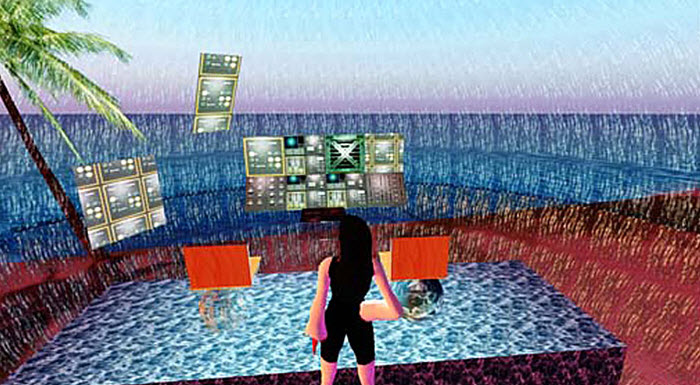
För Biennale di Venezia 2009 skapade Davinio den virtuella installationen The First Poetry Space Shuttle Landing on Second Life . Över 200 poeter från runt om i världen deltog i projektet, som var en hyllning till italiensk futurism. Den 20-21 juli firade man 40-årsjubileumet av den första månlandningen genom att låta poeter landa i Second Life, i form av färgsprakande prismor som donerade poesifiler. I samband med Biennale di Venezia 2009 deltog Davinio även i utställningen Détournement Venise 2009.
Exempel på andra verk av Caterina Davinio från 2000-talet
- Caterina Davinio for Alan Bowman’s Fried/Frozen Events (2003)
- Poem in Red – Dedicated to Ferrari Modena Car (2004/05)
- Fluxus Trilogy (2002)
- Movember 16th
- Movember 20th
- Other Fluxes and Small Decadence
- Caterina Davinio for Alan Bowman Fried/Frozen Events (2003)
- Poem in Red – Dedicated to Ferrari Modena Car (2004/05)
- Milady Smiles – Dedicated to Jaguar E (2007)
- Nature Obscure (2007)
- Knives
- Nature_Obscure
- Ma-mma (2008)
- Big Splash (2009)
- Cracks in Memory (2009)
- Goa Radio Station from North Pole – Self-Portrait (2010)Med musik av Mirko Lalit Egger
- Finally I Remember (2010)Med musik av rockbandet The NUV
2010-talet
År 2014 släpptes Big Splash, 25 digitala bilder kring temat vatten. Bilderna är i grunden digitala fotografier som sedan utsmyckats på olika vis. De är trycka på aluminium och togs fram till OLE.01 Festival.